

The Ultimate Guide to Red Dot Sights: Why 2 MOA & Motion Awake Are Game-Changers
Apr 02, 2026
Navigating firearm optics can be overwhelming, with countless technical terms and options to consider. This guide breaks down what really matters—like 2 MOA dots and Motion Awake technology—so you can choose a red dot that improves your speed, accuracy, and overall shooting performance.
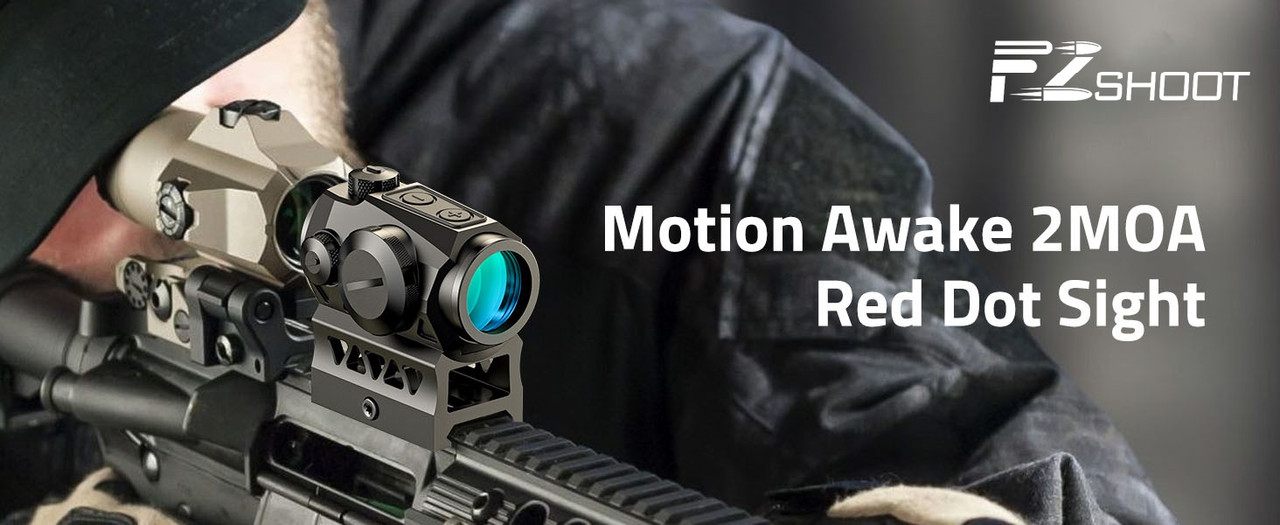
Decoding Red Dot Sight Technology: What You Need to Know
Before choosing an optic, it's essential to understand the foundational concepts that dictate its performance. A solid grasp of these principles will empower you to look beyond the price tag and evaluate a sight based on its practical capabilities.
What is a Red Dot Sight?
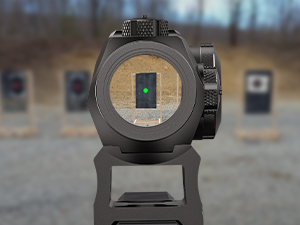
A red dot sight is a type of non-magnifying reflex sight that projects an illuminated aiming point (the "dot") onto a slightly angled, coated piece of glass. This dot appears to be superimposed on the target. Unlike traditional scopes or iron sights, a red dot sight allows you to shoot with both eyes open. This provides two massive advantages: 🔴 unrestricted peripheral vision and 🔴 dramatically faster target acquisition. You no longer need to align a rear sight, a front sight, and the target; you simply place the dot on the target and press the trigger.
Understanding MOA: The Secret to Precision
MOA stands for "Minute of Angle," an angular measurement. In practical terms, one MOA equals approximately one inch at 100 yards, two inches at 200 yards, and so on. The MOA value of a red dot tells you how large the dot will appear on a target at that distance.
- Larger Dots (4-6 MOA): These are easier to see and faster to pick up, making them excellent for very close-quarters shooting. However, at longer distances, they can cover too much of the target, hindering precision.
- Smaller Dots (1-2 MOA): These offer a much more precise aiming point. A 2 MOA dot, for example, covers only a 2-inch circle at 100 yards. This makes it a superb all-around choice, providing a perfect balance between speed up close and precision at extended ranges. It's the "do-it-all" size for most rifle and carbine applications.
The Power of "Motion Awake" Technology
One of the biggest concerns with electronic optics has always been battery life. Early red dots required users to manually turn them on and off, leading to dead batteries at the worst possible moments. "Motion Awake" (also known by brand names like MOTAC™) solves this problem elegantly. ⚙️ The optic contains a motion sensor that automatically puts it into a low-power sleep mode after a period of inactivity. The moment the firearm is moved, the sight instantly powers back on to its last brightness setting. This technology extends battery life from hundreds of hours to tens of thousands, ensuring your optic is always ready when you are.
Co-Witness Explained: Integrating Iron Sights
Co-witnessing refers to the alignment of your iron sights with your red dot sight. It's a crucial concept for ensuring you have a reliable backup system. A quality riser mount allows you to achieve one of two primary co-witness configurations:
- Absolute Co-Witness: The iron sights and the red dot are on the same vertical plane. When you look through your rear peep sight, the red dot will sit directly on top of your front sight post. This provides a familiar sight picture but can clutter your view.
- Lower 1/3 Co-Witness: The iron sights are positioned in the lower third of the optic's window. This clears up your field of view, allowing you to focus solely on the red dot. To use the iron sights, you simply lower your head slightly to align them. For most shooters, this is the preferred modern setup. For more information on setting up your sights, you can find excellent guides from sources like the National Rifle Association.
Putting Theory into Practice: The Right Optic for Your Mission
An optic's value is determined by how well it performs in your specific use case. A versatile red dot sight should excel across multiple scenarios.
For the Range Shooter & Plinker
At the range, speed and fun are often the primary goals. A 2 MOA red dot allows for rapid transitions between targets without obscuring steel plates or paper silhouettes. The unlimited eye relief means you can mount it wherever is most comfortable, and shooting with both eyes open makes for a more engaging and less fatiguing experience.
For the Home Defense Guardian
In a high-stress defensive situation, simplicity and reliability are paramount. A Motion Awake feature is non-negotiable here; it guarantees your optic is on and ready the second you pick up your firearm. The clear, single focal plane of a red dot eliminates the complex mental task of aligning iron sights under duress, allowing you to stay focused on the threat.
For the Close-Range Hunter 🏹
When hunting game like hogs or coyotes in brushy terrain, shot opportunities are fleeting. A red dot sight enables you to get on a moving target instantly. The 2 MOA dot is precise enough for ethical shots within 100-150 yards, while the wide field of view helps you track animals as they move through cover.
Low-Light & Night Vision Operations 🔦
A quality red dot sight should offer a wide range of brightness settings. The lower settings are crucial for low-light conditions at dawn or dusk, preventing the dot from "blooming" and obscuring your target. The inclusion of night vision (NV) compatible settings means the optic can be used in conjunction with NV devices without causing damage to the tube or creating an unusable, overly bright sight picture.
Beyond the Spec Sheet: Practical Performance Factors
Technical specifications are important, but real-world performance is what truly counts. Here are the factors that separate a great optic from a mediocre one.
- Clarity & Lens Coatings: The quality of the glass and its coatings directly impacts light transmission and image clarity. Multi-coated lenses reduce glare, reflections, and scratches, providing a crisp, clear sight picture in various lighting conditions.
- Durability & Construction: Your optic is not just an accessory; it's a critical piece of equipment. Look for sights constructed from aircraft-grade aluminum (like 6061-T6) that are shockproof and fog-proof. An IPX7 waterproof rating ensures it can withstand full immersion in water, guaranteeing performance in any weather.
- Battery Life & Efficiency: As discussed, a 50,000-hour battery life, enhanced by Motion Awake technology, is the modern standard. This translates to years of use on a single battery, providing peace of mind.
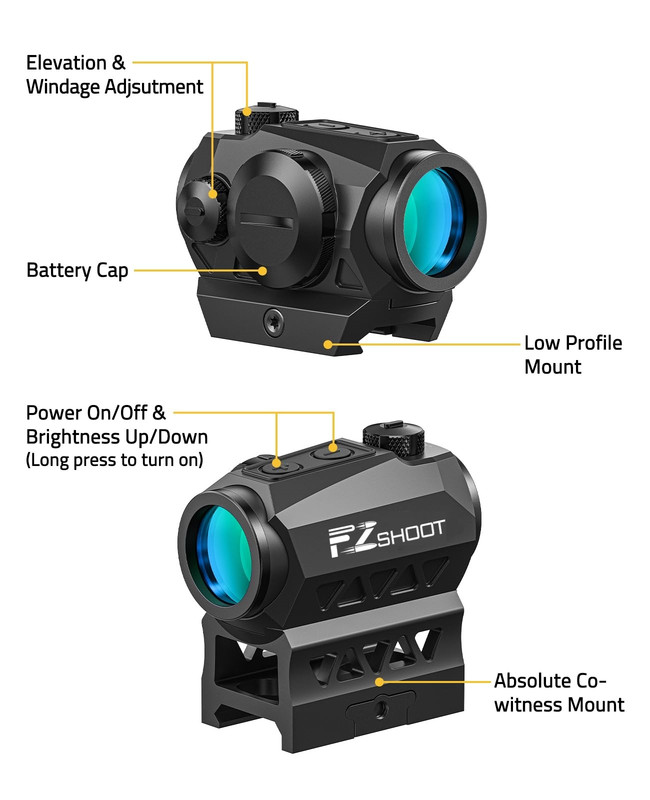
- Ease of Use & Mounting: A great optic should be user-friendly. This includes tactile, audible clicks for windage and elevation adjustments and a versatile mounting system. An included riser mount that offers both Absolute and Lower 1/3 co-witness options provides immense value and flexibility right out of the box.
Our Recommendation for Performance and Value: The EZshoot 2MOA Red Dot
After breaking down the essential features of a modern, high-performance red dot sight, one model consistently emerges as a leader in both capability and value: the EZshoot 2MOA Red Dot Sight with Motion Awake. It isn't just a collection of features; it's a purpose-built tool that directly addresses the needs of today's shooter by integrating the most critical technologies into a durable and affordable package.
Decision Summary: EZshoot 2MOA Red Dot
- Versatile Aiming Point: A crisp 2 MOA dot provides the perfect balance for speed and precision.
- Always-Ready Performance: Motion Awake technology ensures instant activation and a battery life of up to 50,000 hours.
- Flexible Mounting: Includes a riser mount for both Absolute and 1/3 Lower Co-witness, fitting any shooter's preference.
- All-Weather Reliability: IPX7 waterproof and fog-proof construction built from rugged 6061 aluminum.
- Superior Clarity: Multi-coated lens for a clear, bright, and parallax-corrected sight picture.
- Full Control: 10 brightness settings, including 8 for daylight and 2 compatible with night vision devices.
This sight encapsulates everything we've discussed. The 2 MOA dot is ideal for the dynamic shooting scenarios you're most likely to encounter. The Motion Awake feature removes any concern about battery management. The included mount saves you the additional cost and research of finding a compatible riser, and its robust, waterproof construction means you can trust it to perform when it matters most. It's a comprehensive solution for anyone looking to make a meaningful, reliable upgrade to their firearm. For more detailed insights into different types of optics, resources from experts like
What Users Are Saying:
"I was skeptical at this price point, but the EZshoot red dot has been flawless. The 2 MOA dot is perfectly crisp, and the shake-awake feature works exactly as advertised. I've had it on my AR for over 500 rounds, and it's held zero perfectly. The included mount offering both co-witness options is a huge bonus."
"The glass is surprisingly clear, and the brightness settings are fantastic. I can dial it down for indoor ranges or crank it up for bright, sunny days. The build quality feels solid, and it survived a full day of training in the rain without any issues. This is the best value red dot on the market, period."
⚙️ Common Mistakes & Pro Tips
To get the most out of your optic, avoid these common pitfalls and implement some pro-level techniques.
Common Mistakes to Avoid:
- Obsessing Over Parallax: While important, modern red dots are operationally parallax-free past 50 yards. Focus on a consistent cheek weld, but don't worry about being perfectly centered for every shot.
- Setting Brightness Too High: A dot that's too bright will "bloom" or create a starburst effect, ruining precision. The dot should be just bright enough to be clearly visible against the target, not a distracting beacon.
- Forgetting Your Backups: Technology can fail. Always ensure your iron sights are zeroed and accessible. A good co-witness setup makes this seamless.
Real-World Pro Tips:
- Zero for Maximum Versatility: A 50-yard zero is highly effective for most 5.56/.223 platforms. This will typically result in a trajectory that is also on target at around 200 yards, providing a "point and shoot" solution for most practical engagement distances.
- Practice with Both Eyes Open: This is the single greatest advantage of a red dot. It might feel strange at first, but forcing yourself to keep both eyes open will dramatically increase your situational awareness and speed.
- Use Lens Covers: Protect your investment. Keep the lens covers on during storage and transport to prevent scratches and keep dust off the glass.
Frequently Asked Questions (FAQ)
Is a red dot sight better than iron sights?
For speed and ease of use, a red dot sight is generally superior to iron sights. It allows you to focus on the target (not the front sight post) and shoot with both eyes open, which significantly improves situational awareness and target acquisition speed. Iron sights remain a reliable backup but require more practice to master aligning the rear sight, front sight, and target.
How long does a modern red dot battery last?
Battery life in modern red dot sights has improved dramatically. Many high-quality optics, like the EZshoot 2MOA Red Dot, can last up to 50,000 hours on a medium brightness setting. Features like 'Motion Awake' (or MOTAC) extend this even further by automatically turning the sight off when idle and instantly on when moved, ensuring the battery is only used when needed.
Final Thoughts: Elevating Your Shooting Experience
Choosing the right red dot sight is about more than just buying a new piece of gear; it's about investing in speed, confidence, and accuracy. By understanding the core technologies—the versatility of a 2 MOA dot, the mission-critical reliability of Motion Awake, and the flexibility of co-witness mounting—you can confidently select an optic that meets your demands. The right sight removes barriers, simplifies the shooting process, and allows you to perform at your best. Stop letting confusing specs and marketing jargon hold you back. It's time to equip yourself with a tool that is as reliable and ready as you are.

